Why Do Greeks Smash Plates?
Greeks smash plates to celebrate. A plate breaking on the floor says the night is too good to hold back: it is an expression of kefi, the Greek word for joy, high spirits and the urge to dance. Older explanations add that breaking plates shows abundance, marks the end of one chapter and the start of another, and keeps bad luck away from a happy occasion. That last idea is why the custom has always been close to weddings.
We have worked more than 700 weddings across Greece since 2005, many of them Greek or mixed-culture, and the moment the plates come out is still one of the best of the night. Here is where the tradition comes from, what it looks like today, and how it actually happens at a wedding in Greece.
In this article
Where the tradition comes from
Nobody knows exactly when Greeks started breaking plates. There are several explanations, and most Greeks will happily give you all of them:
- Joy and kefi. The simplest one. When the music and the company are right, breaking something shows you have let go completely.
- Abundance. A household that can afford to smash its dishes is a household doing well.
- Endings and new beginnings. A broken plate marks a line between what was and what comes next. That fits a wedding perfectly.
- Keeping bad luck away. An old belief held that a happy celebration could attract envy or evil spirits, and that the noise and the breaking would confuse them and protect the couple.
The custom became famous abroad after the 1960 film Never on Sunday, and plate smashing peaked in Greek tavernas and music halls in the 1960s and 1970s. It became so wild that the military government of the time banned it in nightclubs around 1969, because flying shards were hurting people. Two things came out of that: plaster plates, made to shatter safely, and the habit of throwing flowers at the musicians instead.
1960
Never on Sunday takes plate smashing abroad
1969
banned in nightclubs, plaster plates appear
Today
weddings and big celebrations keep it alive
Do Greeks still smash plates today?
Yes, but less often than the postcards suggest. You will rarely see it in an ordinary taverna now. Flowers have largely taken its place in Greek music venues, where guests buy trays of carnations or petals and throw them over the singer and the dancers.
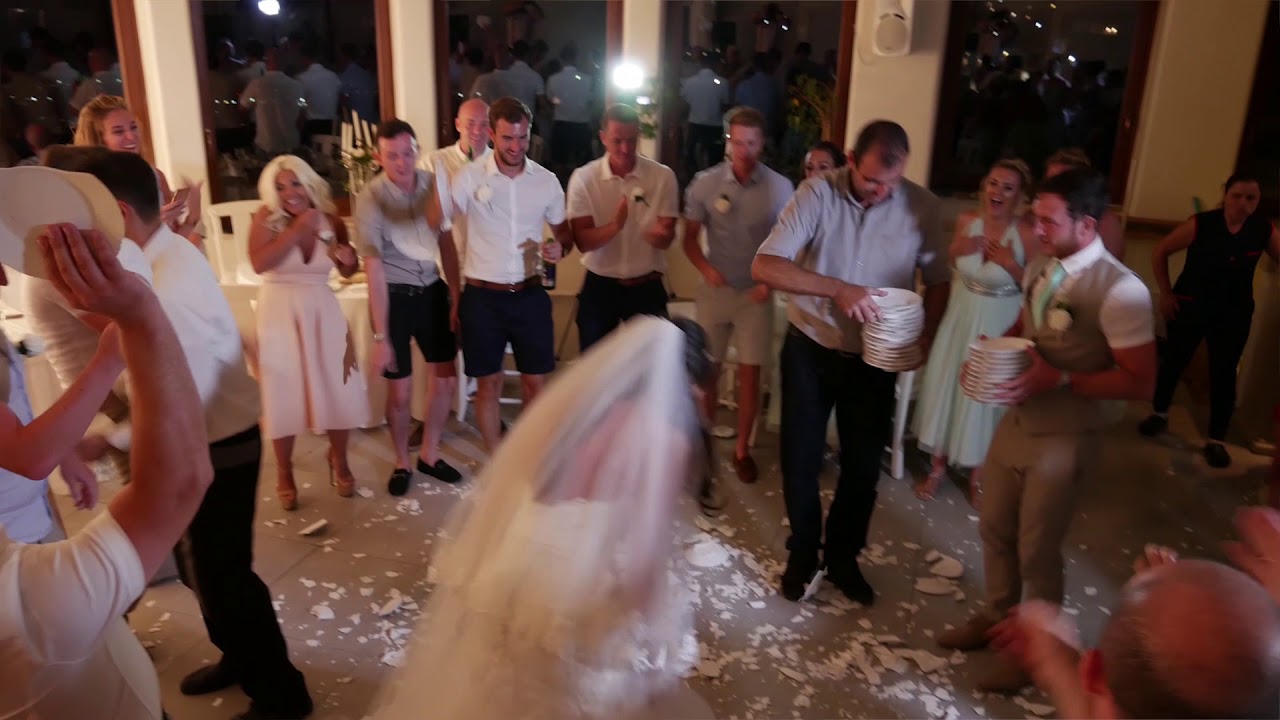
Weddings, name days and big family celebrations are where plates still break. When they do, they are almost always plaster plates, not real china. They look the part, break with a satisfying crack, and are far kinder to bare feet and sandals.
Plate smashing at a Greek wedding
At a wedding, the plates belong to one moment: the Greek music set, usually once dinner is over and the dance floor is already full. The band or the DJ moves into the songs everyone knows, the circle forms, and the couple ends up in the middle. Then the plates go down at the dancers’ feet, flowers fly, and the dance gets faster.

You do not need to be Greek, or have Greek family, to enjoy it. Some of the best plate-smashing moments we have seen were at weddings where half the guests had never heard of it before that evening.
Some of the best plate-smashing moments we have seen were at weddings where half the guests had never heard of it before.
Mike Vekris
How the moment comes together
A good plate-smashing moment looks spontaneous. In practice it is planned, so it lands at the right time, on the right music, and nobody gets hurt. This is how we put it together.
The music: a live bouzouki band
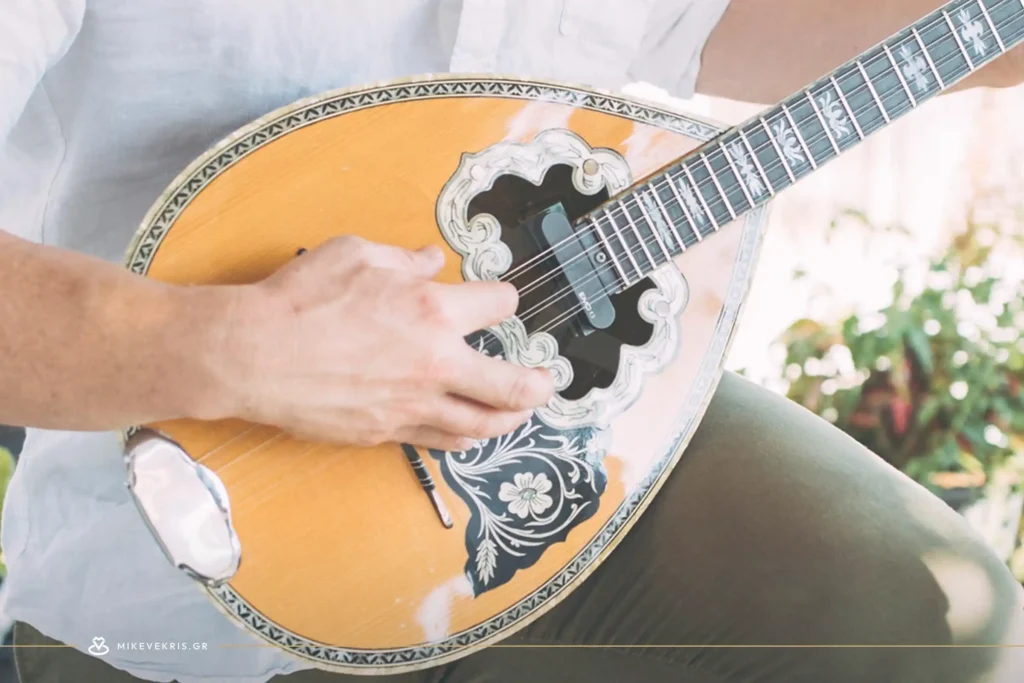
Nothing lifts a room like live bouzouki. Our Greek wedding band plays the songs that make Greeks get up from their chairs, from the slow zeibekiko to the hasapiko and, of course, Zorba, which starts slow and keeps speeding up until the whole floor is flying.
We agree the set with you in advance, including the songs you want for the plates. We can bring the plaster plates too, or your planner, your venue or you can arrange them separately.
The handover: DJ and band on one system
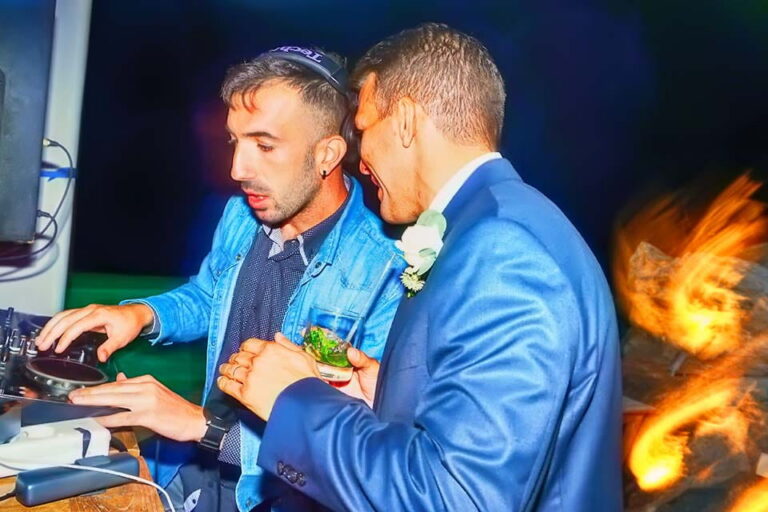
The worst thing that can happen after a great Greek set is silence. Our DJs share the same sound system as the band, so when the last bouzouki note ends the dance floor carries straight on, with no gap and no change of mood. The DJ also knows the Greek repertoire, so if the night calls for one more round of Zorba after the band has finished, it happens. See our wedding DJs.
The light: lighting operated live
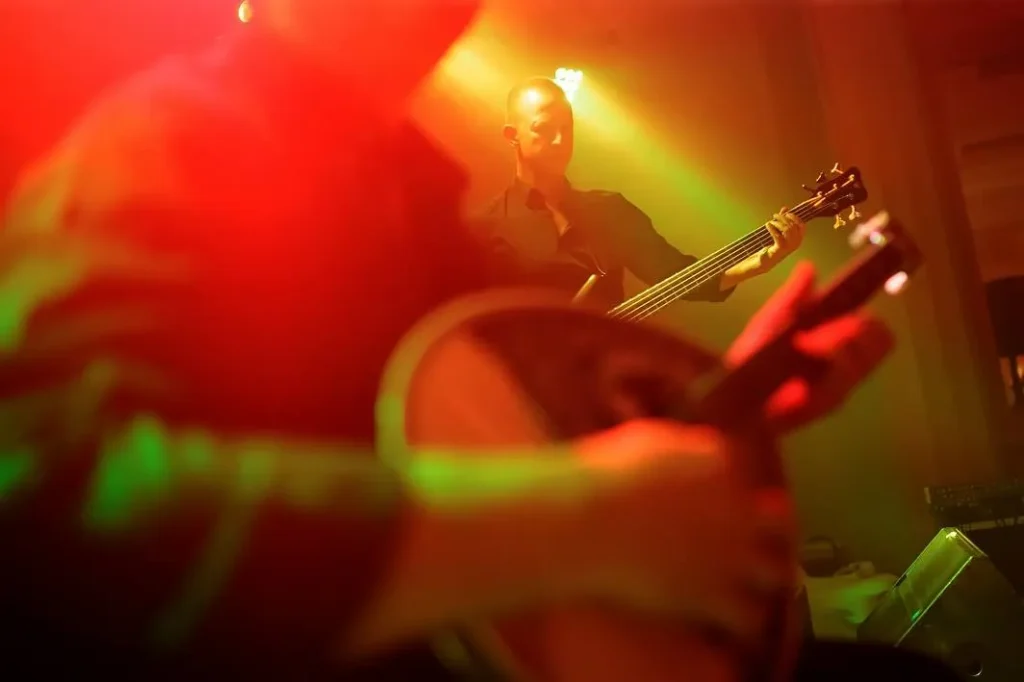
The Greek set is a moment, and it should look like one. Our dance floor lighting is run live by a technician, not on a loop, so the light follows the music: warmer and lower for a slow zeibekiko, brighter and more alive when Zorba speeds up.
It is mixed for the camera too, so your photographer and videographer get the shot without flicker. Over the floor, string lights or fairy lights give the whole scene that warm summer-night glow.
The flowers and the extras
Many couples now pair the plates with the newer tradition of throwing flowers. We use real rose petals or biodegradable confetti, thrown by guests or released over the couple at the peak of the dance; see our wedding effects. For an even bigger finish, cold sparks fountains around the dance floor give a smokeless, non-flammable burst of light that looks spectacular on video; see fireworks and sparks.
The sound
Bouzouki, voices and a floor of people singing along need a proper sound system, tuned for the space and within the venue’s noise limits. That is our everyday work; see sound and backline.
Planning plate smashing at your wedding in Greece
- Ask your venue first. Not every venue allows plate smashing, and some only allow it in a certain area or with plaster plates. The same goes for petals, confetti and sparks. The venue approves them, checking is up to the couple or the wedding planner, and it is best done early.
- Use plaster plates. They break safely, sweep up quickly and suit a dance floor full of guests in sandals.
- Choose the moment. It works best during the Greek set, when the floor is full and the energy is up, not as a stand-alone show. Tell us when you want it and we will plan the music and the light around it.
- Warn your photographer and videographer. It all happens in a few minutes. Make sure they know when the Greek set starts and where to stand.
- Plan the clean-up. A short pause to sweep the floor keeps the dancing going safely for the rest of the night.
- Bring in the flowers. Petals over the couple make a beautiful second wave, and they look wonderful in photos.
In short
- Plates break for joy, abundance and a fresh start, and once, to keep bad luck away.
- At weddings they belong to the Greek set, with live bouzouki and Zorba.
- Ask your venue early and use plaster plates.
Questions couples ask
Why do Greeks smash plates at weddings?
To celebrate the couple with joy and kefi, to wish them abundance and a fresh start, and, in the old belief, to keep bad luck away from the newlyweds.
What do Greeks shout when they smash plates?
Opa! It is a cheer that means roughly “let’s go” or “that’s it”, and you will hear it all through the Greek set.
Is plate smashing illegal in Greece?
It was banned in nightclubs around 1969, during the military government, because of injuries. Today it is a matter for each venue: many do not allow it, and those that do usually ask for plaster plates.
Are the plates real?
At weddings, almost always not. Plaster plates are made to look like china and break safely.
What music goes with plate smashing?
Traditional Greek dances played live on bouzouki: zeibekiko, hasapiko and Zorba are the classics.
Can we do it if we are not Greek?
Absolutely. Many of the couples we work with come from abroad, and the Greek set is often their guests’ favourite part of the night.
Want the Greek night done properly?
Live bouzouki, a DJ who carries the floor on, and light that follows the music. Tell us about your wedding in Greece.